


Blog








0102030405
What is the difference between methylfolate and methylcobalamin?
2026-03-19
In daily nutritional supplementation and health management, methylfolate and methylcobalamin are two frequently encountered active forms of B vitamins. Many people easily confuse the two, but they differ significantly in structure, function, and applicable scenarios, yet they often work synergistically to protect human metabolism and neurological health.
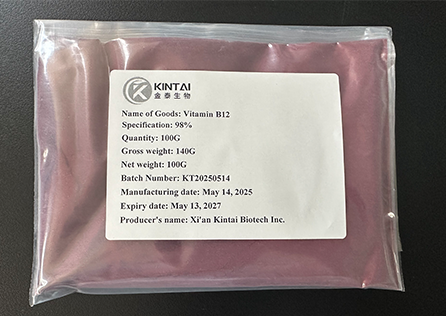
Kintainutri®’s Methylcobalamin (98% purity) is available in bulk from the original factory at affordable prices.Contact us now for a quote!
What is methylfolate?
Methylfolate is the active form of folic acid and the "ultimate form" in which folic acid performs its physiological functions in the body. It directly participates in the transfer of one-carbon units, which is crucial for DNA synthesis and repair, cell division, and growth.
More importantly, methylfolate is a key molecule in the homocysteine metabolic pathway. It provides a methyl group, helping to convert harmful homocysteine into beneficial methionine.
What is methylcobalamin?
Methylcobalamin, the active form of vitamin B12, contains cobalt ions and a methyl group. It functions without in vivo activation and is a key coenzyme for nervous system health and erythrocyte production.
It is a coenzyme for methionine synthase, an enzyme responsible for converting homocysteine to methionine, thus ensuring the successful methylation reaction.
Difference between methylfolate and methylcobalamin
Methylfolate and methylcobalamin are two completely different types of vitamins, playing distinct yet complementary roles in the human body.
The core differences between them lie in their classification, function, and metabolic pathway, which are key to understanding the difference between methylfolate and methylcobalamin:
●They belong to different categories: methylfolate belongs to active folic acid (vitamin B9), while methylcobalamin belongs to active vitamin B12.
●Their core functions differ: methylfolate is responsible for DNA synthesis and homocysteine metabolism, and helps the fetal neural tube develop; methylcobalamin focuses on the maintenance of nerve myelin sheath and the repair of nerve conduction, and prevents peripheral neuropathy.
●Metabolic differences: Methylfolate can be directly absorbed and utilized by the human body, making it suitable for people with abnormal folic acid metabolism genes; methylcobalamin is the optimal active form of B12, easily penetrates the blood-nerve barrier, and has stronger neural affinity.
●The symptoms of deficiency differ: deficiency in the former can easily lead to megaloblastic anemia and fetal developmental abnormalities; deficiency in the latter is often accompanied by numbness in the hands and feet, neuralgia, and memory loss.
Methylfolate and methylcobalamin for kids
Both are indispensable during a child's growth and development, but their focus differs. Methylfolate supports rapid cell division and normal brain development in children, effectively preventing developmental delays, and is especially beneficial for children who are picky eaters or primarily vegetarian.
Methylcobalamin, on the other hand, focuses on maintaining healthy nerve conduction in children, helping to improve discomfort such as poor concentration and numbness in the hands and feet, while also promoting the normal maturation of red blood cells, laying a solid foundation for a child's vigorous growth.
Methylcobalamin, on the other hand, focuses on maintaining healthy nerve conduction in children, helping to improve discomfort such as poor concentration and numbness in the hands and feet, while also promoting the normal maturation of red blood cells, laying a solid foundation for a child's vigorous growth.
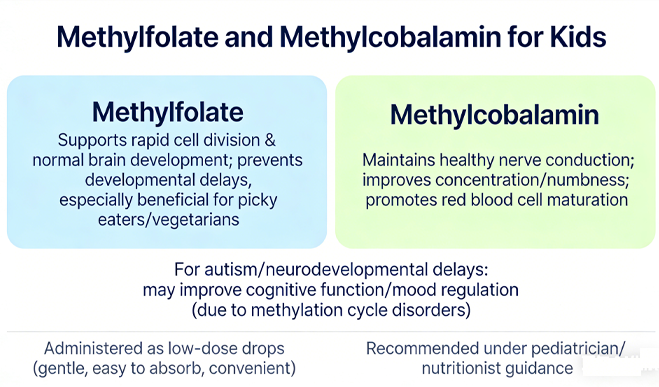
In cases of autism spectrum disorder or certain inherited neurodevelopmental delays, supplementation with methylfolate and methylcobalamin may help improve cognitive function and mood regulation, as children may have methylation cycle disorders.
Especially for children with autism spectrum disorder or hereditary neurodevelopmental delay, who often have methylation cycle disorders, scientific supplementation with methylfolate and methylcobalamin can effectively help improve cognitive function and mood regulation, providing key support for neurodevelopment.
Considering the physiological characteristics of children, these nutrients are usually taken in low-dose drop form, which is gentle, easy to absorb, and more convenient to take. They can precisely support children's neurological development and maintain normal homocysteine levels in the body.
They are especially suitable for children who do not get enough intake in their daily diet or have absorption disorders. It is recommended to supplement them under the guidance of a pediatrician or professional nutritionist for safety and effectiveness.
They are especially suitable for children who do not get enough intake in their daily diet or have absorption disorders. It is recommended to supplement them under the guidance of a pediatrician or professional nutritionist for safety and effectiveness.
What is methylfolate and methylcobalamin used for?
Methylfolate and methylcobalamin supplement
This supplement, which combines methylfolate and methylcobalamin, can be used to lower homocysteine levels, maintain cardiovascular health, and repair nerve damage. It is widely applicable to adults, the elderly, and vegetarians.
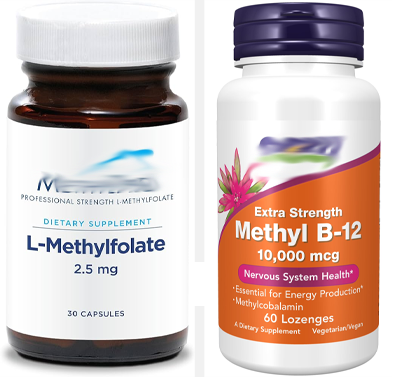
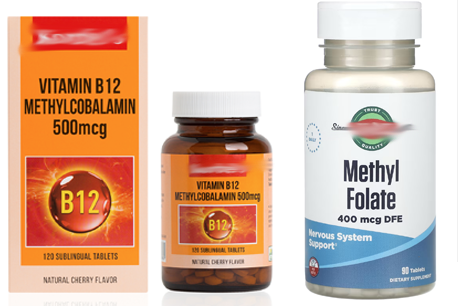
Methylfolate supplements are essential for those trying to conceive and during pregnancy, reducing the risk of neural tube defects in the fetus; methylcobalamin supplements are mainly for numbness and pain caused by diabetic peripheral neuropathy, lumbar nerve compression, etc., and have a clear neuroprotective effect.
Methylfolate and methylcobalamin tablets
Tablets are the most common dosage form. In studies on diabetic neuropathy, the combination of L-methylfolate, methylcobalamin, and pyridoxal-5'-phosphate in tablet form effectively reduced patients' neuropathic pain symptoms and showed the potential to repair the density of epidermal nerve fibers.
Can I take methylcobalamin and methylfolate together?
Yes, and combined supplementation is the more efficient and recommended golden combination.
Both work synergistically in the homocysteine metabolic pathway: methylfolate provides a methyl group, and methylcobalamin acts as a coenzyme to catalyze the reaction, together lowering homocysteine levels and protecting the heart, brain, and nerves.
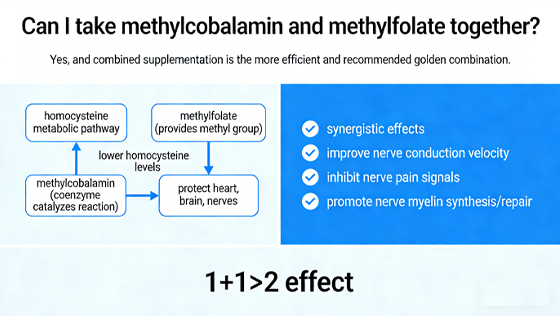
Studies have shown that the synergistic effect of methylcobalamin and methylfolate together can not only significantly improve nerve conduction velocity and inhibit nerve pain signals, but also jointly promote the synthesis and repair of nerve myelin sheath, achieving a remarkable effect of 1+1>2.
Where to buy methylcobalamin powder by Kintainutri®?
Kintainutri® employs safe and advanced synthesis processes, focusing on providing pharmaceutical and health supplement companies with methylcobalamin powder raw materials with a purity of up to 98%.
We strictly control quality from the source, fully preserving the natural high activity of methylcobalamin, providing a safe guarantee for your development of high-end products such as drugs for treating neurological diseases and dietary supplements for improving anemia.
We strictly control quality from the source, fully preserving the natural high activity of methylcobalamin, providing a safe guarantee for your development of high-end products such as drugs for treating neurological diseases and dietary supplements for improving anemia.
Reference: